Why have our own facility?
A farm-specific solution maximises the added value of the farm’s biomass for its owner
With an on-site plant, sludge transport distances are short, which means that the sludge can be fed into the biogas process quickly. This ensures that the sludge retains its high gas production potential, and no energy is wasted on operations related to sludge transport and storage.
- Rapid biomass feeding into a biogas plant ensures the highest possible energy yield from the feedstock.
- No emissions are produced during storage, and all potential is converted into energy
- Storing sludge for more than ten days can reduce gas production by up to 40%
- No energy is wasted on long-distance transport of sludge
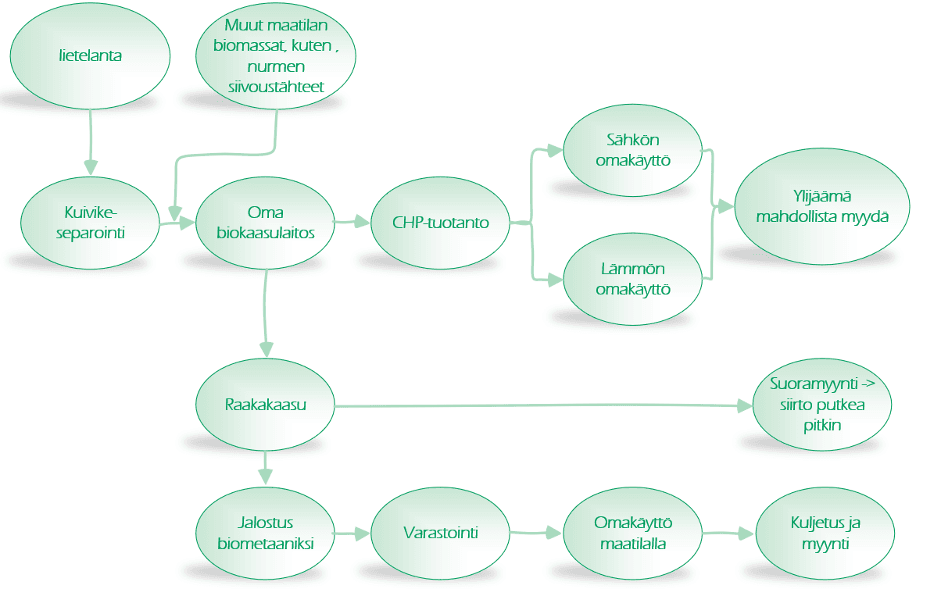
- The end products of the on-site plant include
- Electricity
- Heat
- Raw gas
- Biomethane
- Organic bedding for animals
- A higher-quality fertiliser that is better suited to plants
BGC offers a solution for farms that increases self-sufficiency and enables them to operate in an environmentally friendly way.
- When feed and waste are processed on-site, the hygiene risks at individual facilities are significantly lower and any necessary hygiene decontamination can be confined to a single facility.
- Due to their design, BGC’s systems are easy to expand and resell.
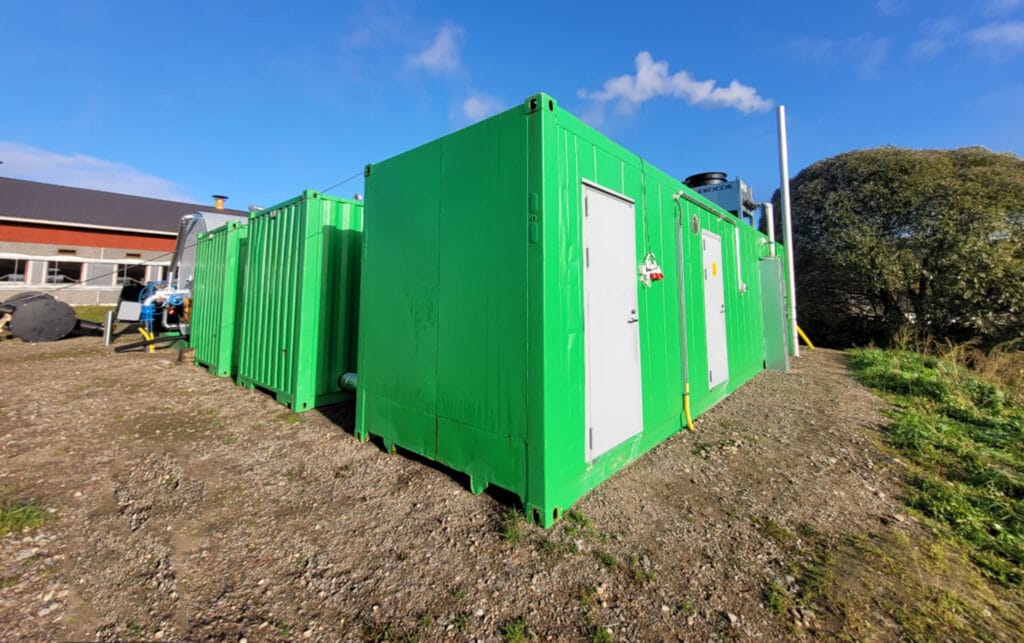
Below is an example of a BGC biogas plant solution on a farm
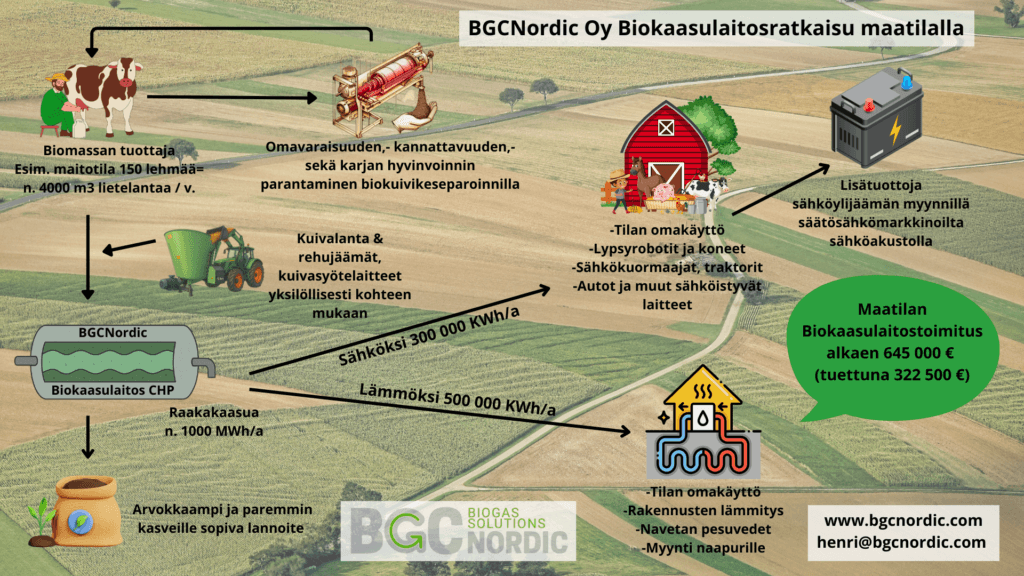
Farm profitability improves when energy, bedding and fertiliser are produced intelligently
Farms consume significant quantities of purchased goods and energy, the prices of which have come under considerable upward pressure. A great many cost-effective feasibility studies have been carried out using BGC’s equipment.
The repayment period depends on, among other things,
- When it comes to the amount of electricity to be supplied, the best price is achieved by supplying enough to cover one’s own consumption and selling the surplus to the grid
- The amount of thermal energy to be compensated for and the current form of production
- The price of the bedding to be reimbursed
- Fertiliser and logistics: for example, dry manure no longer needs to be spread separately, and slurry is in a more manageable form
- Try our free calculator for a preliminary estimate, or get in touch and we’ll work out a profitability assessment together:
- When calculating profitability, consideration should be given to optimising the energy balance from the perspective of CHP production, so that the plant delivers the greatest possible benefit to the owner
The benefits and experiences of reactor technology:
BGC’s reactor technology combines several well-known advantages in biogas production, resulting in high energy output per unit of reactor volume.
The competitive advantage of reactor technology is the sum of the following factors:
- Plug flow process = the residence time of the feed can actually be controlled
- Thermophilic process = up to 100% more efficient/faster process
- A higher dry matter content in the feedstock = the gas produced is formed from the organic matter contained in the dry matter, not from water
- Patented reactor technology enables extremely precise temperature control, and the temperature can be maintained in accordance with the optimal conditions for anaerobic digestion = An efficient and stable process
- The installation makes use of the earth’s pressure and insulating properties = inexpensive to install, good insulation all year round and low energy consumption
Experiences from the Paavola dairy farm
The Paavola dairy farm has been using a thermophilic process since the summer of 2024.
- Long service intervals and low maintenance costs
- The results of reactor technology speak for themselves
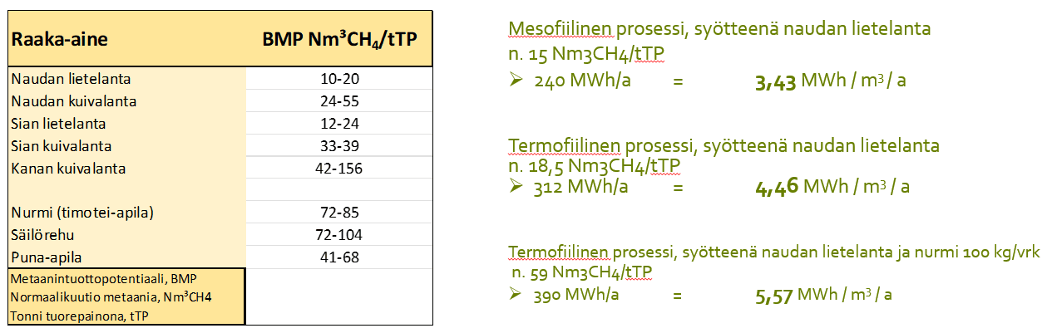
- The results measured below, expressed as the amount of energy produced per year per unit of reactor volume (MWh/m³/a).
- The volume of cattle slurry has remained constant throughout